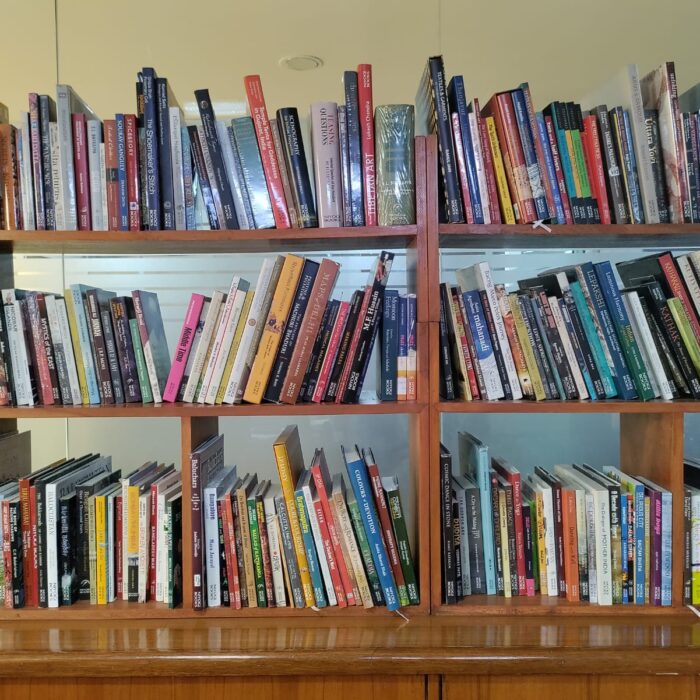

HOLDING ON: LITERATURE AND LIFE
Literature helps us know and feel; however, that is not the reason why we read it in the first place. We read mostly for pleasure. As we read, we feel what we read resonates with us and becomes part of our being. We connect with the written words and thoughts, questioning and sometimes disagreeing with them. The reading experience makes us see things differently, as our sensibilities are enhanced over a period of time and our understanding of life and its myriad experiences increases. In spite of being located distantly in time, space and place, there are things in literary texts that reach out to us, that make sense to us and that remain with us for a long time. As we read, our imagination is exercised and we become active collaborators in the whole literary experience.
The Greeks had an interesting word, ‘catharsis’, that I feel very nicely explains what literature does to us. As we read, we experience a purging and we are left with a state of calm. As the English poet, John Milton, writes ‘And calm of mind, all passion spent.’ The role of books in helping one cope, hold on to and negotiate the myriad turns and twists of life is nowadays receiving a great deal of attention. Bibliotherapy is gaining importance in a world that is characterised by fragmentation, alienation and loneliness. Reading helps in dealing with these and several other mental health issues; it helps one negotiate and process troubling issues and find coping strategies.
Storytelling is something that most of us have been used to since we were kids. The sound of someone’s voice, the way the story moves ahead, the characters we encounter leave an indelible mark on our impressionable minds. It triggers our imagination wonderfully. It encourages us to read as we grow older and become steadfast friends with books. Bibliotherapy is an extension of this very art of storytelling. It creates a sense of community, with books and with people. It is interesting to see the proliferation of book clubs and reading circles, and one reason for this is to encourage reading among people whose world is slowly getting caught in the digital space. The loneliness, the isolation of living in such a space, where the human face and human interactions are lacking, is a cause of great concern. Psychologists have begun using literature and bibliotherapy to deal with the problems caused by this increased isolation.
As we read, we experience
a purging and we are
left with a state of calm.
As the English poet,
John Milton, writes
‘And calm of mind,
all passion spent.’
At the first caregiver meet that I attended several years ago, one that I attended with some skepticism, I returned with a sense that I was not alone. That there were several like me, each trying to negotiate through the maze. It is this sense of community that literature provides us: that sense that, while each of us is different and our issues are different, we can turn to literature to find expressions of something that resonate with us, expressions that will make us hold on to in our own lives.
I would here like to make a note of the proliferation of book clubs, reading circles and book discussions, where people from different spheres come together to read and discuss, to share their experience of a book, the emotions they felt while reading it, or why they didn’t like someone’s recommendation. Many of the reading clubs take place outdoors, in open spaces, on park benches, on the green, allowing people to move out into the open, an experience that takes the idea of reconnecting even
further—with the natural world and with people. In a world that seems to be getting more and more disjointed and lonely, these are the communities that help one connect and share and also help in dealing with life and its myriad issues.
To step into a world of book clubs where stories do more than entertain they comfort, heal, and nurture the mind through the therapeutic art of reading.
- @byobindia : https://www.instagram.com/byobindia
- Kitaab Club : https://www.kitaab.com/
- Silent Book Club – Delhi/Gurgaon: https://www.instagram.com/silentbookclub
https://www.instagram.com/windwordconsult
https://www.instagram.com/rachumassi - Delhi Reads: instagram.com/delhireads
- @lodhireads : instagram.com/lodhireads
- @broke_bibliophiles_delhi
- Cubbon Reads (Bengaluru) @cubbonreads
- Jaipur Reads @jaipur.reads
- Kolkata Reads @kolkatareads
- Bandra Reads (Mumbai) @bandrareads
- Mumbai Bookies @mumbaibookies
- Bessy Reads (Chennai) @bessyreads
- Lake Reads (Chennai) @lakereads_chitlapakkam
- Under The Lamp (Bengaluru) @underthelamp_
- Moonfolk (Women-focused, Bengaluru) @moonfolk.bangalore
- Broke Bombay @brokebombay
- Chembur Reads @chembur.reads