Additional information
| Weight | 0.170 kg |
|---|---|
| Dimensions | 22.9 × 22.9 × 1 cm |

₹320.00
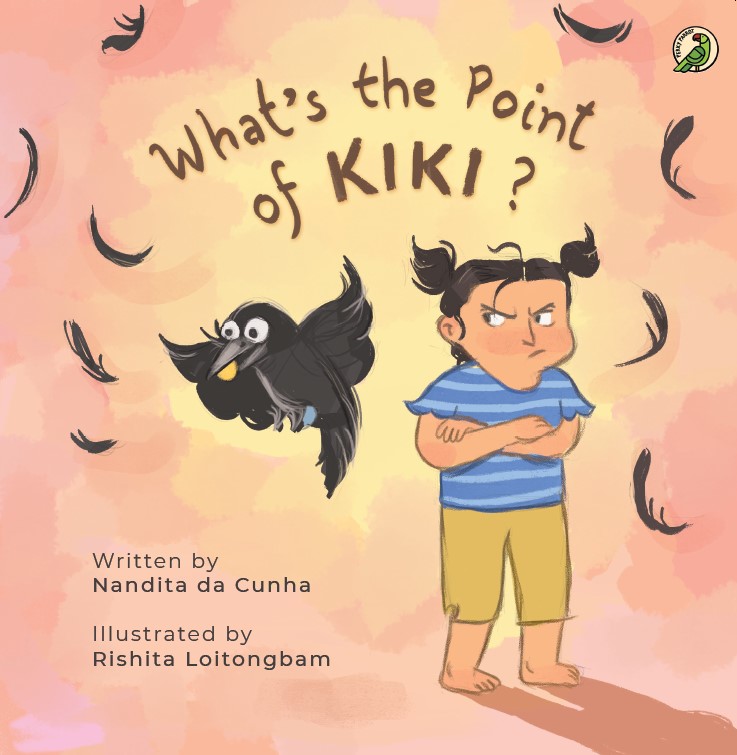
What’s the Point of Kiki? is a warm and humorous picture book about a young girl named Nisha whose life is suddenly turned upside down when an injured crow named Kiki enters her home.
Nisha never asked for a pet—especially not a noisy, messy crow who limps around the house, shreds her belongings, and demands constant attention. When her mother takes Kiki in and begins caring for him, Nisha feels pushed aside. It seems as though all of Ma’s time and affection now belong to this loud, inconvenient bird.
To Nisha, Kiki is nothing but trouble. He doesn’t behave like the pets she imagines having. He cannot fetch, he does not cuddle, and he certainly does not listen. Instead, he caws loudly, makes a mess, and even destroys her maths homework. Frustrated and jealous, Nisha begins to wonder why anyone would want such a pet.
But as days pass, Nisha slowly begins to notice small things about Kiki—his resilience, his personality, and the quiet way he becomes part of their family. What begins as irritation gradually softens into understanding. Nisha realises that love does not always arrive in the ways we expect.
This touching story explores the emotions of jealousy, patience, and empathy, while celebrating the unexpected friendships that can grow when we open our hearts.
Children often experience feelings of jealousy or frustration when attention shifts away from them—whether toward a sibling, a friend, or even a pet. Nisha’s feelings reflect a very real emotional experience that many young readers will immediately recognise.
Through Nisha’s journey, children see how first impressions and misunderstandings can change with time, patience, and empathy. The story gently shows that love and care can grow in unexpected places, even when something initially feels unfair.
The book also introduces children to the idea that animals—whether common pets or unusual ones—deserve compassion and kindness. By presenting a crow as a beloved companion, the story encourages readers to think beyond traditional ideas of pets and appreciate the value of all living beings.
Ultimately, the story helps children understand that relationships, like feelings, can evolve. Sometimes the things we resist the most become the things we cherish deeply.
Understanding jealousy and sibling-like emotions
Nisha’s feelings toward Kiki mirror the emotions children sometimes feel when attention shifts to someone or something new. The story helps children recognise and process these feelings.
Developing empathy and patience
As Nisha begins to observe Kiki more closely, she learns to understand him rather than simply react to her frustration.
Compassion for animals
The story promotes kindness toward animals, including those that may not seem lovable at first glance.
Accepting the unexpected
Kiki is not the kind of pet Nisha imagined, but he becomes meaningful to her in surprising ways. The book encourages children to remain open to experiences that may initially seem inconvenient or unfamiliar.
Recognising the quiet growth of love
The story shows that affection and connection can develop slowly and in subtle ways.
1. Talk about feelings of jealousy
Adults can ask children if they have ever felt like Nisha—ignored, frustrated, or jealous when someone else receives attention. This helps children identify and express their own emotions.
2. Encourage conversations about kindness to animals
The story offers a chance to discuss how humans care for animals, including injured or unusual creatures. Children can reflect on how compassion can make a difference.
3. Use it for read-aloud sessions
The lively and dramatic moments in the story make it ideal for expressive read-alouds. Adults can invite children to mimic Kiki’s sounds or imagine his actions.
4. Explore the idea of unusual pets
Teachers and librarians can ask children to think about animals that are not typical pets and discuss why all animals deserve care and respect.
5. Creative classroom activities
Children can draw their own unusual pet and describe what makes it special. This activity encourages imagination while reinforcing the theme of appreciating differences.
6. Discuss how feelings can change
After reading, adults can ask children how Nisha’s feelings toward Kiki change during the story and what caused that change. This helps children understand emotional growth and perspective.

| Weight | 0.170 kg |
|---|---|
| Dimensions | 22.9 × 22.9 × 1 cm |


Sign up and get notified with new article for free!



Reviews
There are no reviews yet.